How to Use Modes in Game Music
When most composers first learn music theory, they learn two basic sounds: Major for happy or Minor for sad. But in video game music, composers constantly go beyond those two worlds. They use modes. Modes are one of the most powerful emotional tools in game composition because they let you subtly shift the feeling of a melody, harmony, or atmosphere without completely changing keys. A single altered note can transform music to heroic, mysterious, ancient, adventurous, unsettling, dreamy, or tragic.
🎹 What Are Modes?
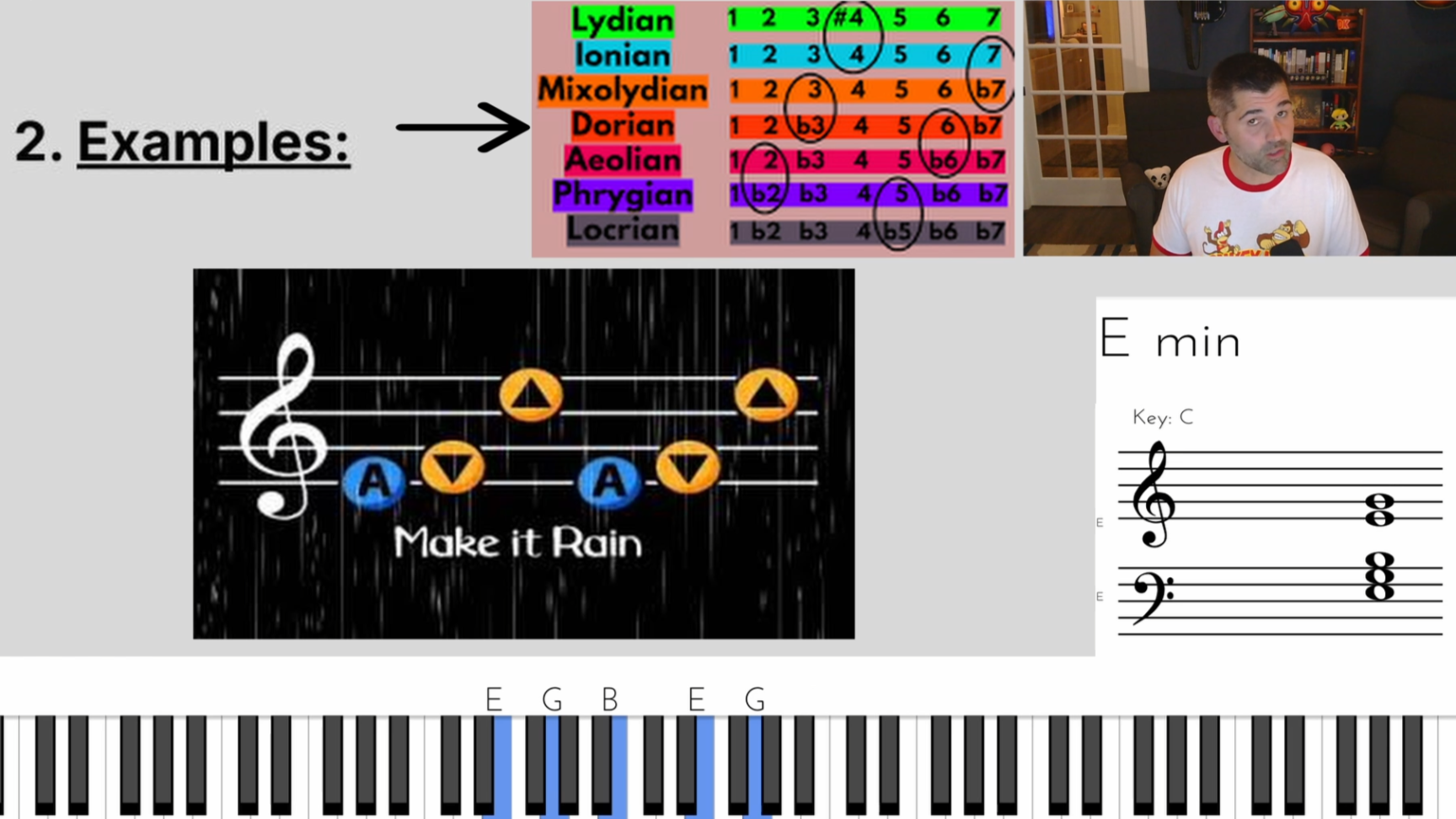
At their core, modes are variations of the major scale. The standard major scale is called Ionian. The standard natural minor scale (that actually lives inside the major scale) is called Aeolian. Each mode changes notes from the major scale, creating a different emotional flavor.
The Seven Modes
The modes are built off of the 7 scaled degrees of the major scale. Thus, there are 7 of them. When the patterns of whole and half steps are jotted down, these are the tweaks to the major (read: Ionian) scale that you find.
Ionian
1 2 3 4 5 6 7
🙂 Peaceful / Stable
Dorian
1 2 b3 4 5 6 b7
😌 Heroic / Mysterious
Phrygian
1 b2 b3 4 5 b6 b7
😠 Dangerous / Aggressive
Lydian
1 2 3 #4 5 6 7
😄 Dreamy / Magical
Mixolydian
1 2 3 4 5 6 b7
😊 Adventurous / Epic
Aeolian
1 2 b3 4 5 b6 b7
😔 Sad / Reflective
Locrian
1 b2 b3 4 b5 b6 b7
😨 Chaotic / Dark
Modes Ordered from Brightest to Darkest
One of the most useful ways to understand modes emotionally is not to put them in numerical order, but instead to arrange them from the brightest sound to the darkest. This happens because each mode gradually introduces more lowered (“flat”) notes, darkening the emotional color.
☀️✨ Lydian
😄 Dreamy / Floating
🌤️ Ionian
🙂 Peaceful / Stable
🌅⚔️ Mixolydian
😊 Adventurous / Heroic
🌙🛡️ Dorian
😌 Noble / Bittersweet
🌑🌧️ Aeolian
😔 Sad / Reflective
⚠️🔥 Phrygian
😠 Dangerous / Aggressive
🕳️💀 Locrian
😨 Chaotic / Unstable
You’ll notice that major (Ionian) isn’t the brightest. There is a brighter version of it called Lydian with a #4. There is conversely a darker version of major called Mixolydian with a b7. The same is true of natural minor (Aeolian). You go brighten it with Dorian or make it darker with Phrygian and Locrian. Try to always see modes in this order, the emotional order. The big idea, the further downward you go, the more tension, instability, and darkness the mode tends to create.
🎨🔑 The Secret to Modes: Characteristic Notes
Every mode has a note that gives it its emotional identity. Think of it as the mode’s “Color Note”. That one altered note is often enough to completely change the emotional impact of a passage. Game composers lean heavily on these notes to shape player emotion. Let’s explore each mode and their “color notes”.
☀️🙂 1. Ionian – The Major Scale
Formula: 1 2 3 4 5 6 7
😊 Emotional Flavor:
Safe
Peaceful
Innocent
Relaxed
Ionian is simply the normal major scale. It’s bright, stable, and emotionally “resolved,” which makes it perfect for:
towns
happy exploration
victory themes
calm overworld music
Because it is so stable, composers often spice it up with:
chord extensions
pedal tones
modal borrowing
suspended chords
Otherwise, pure major can sometimes feel too plain or predictable.
🎮 Examples:
“Good Egg Galaxy” — Super Mario Galaxy
Museum Theme — Animal Crossing
Wind Waker Opening — The Legend of Zelda: The Wind Waker
🌙🛡️😌 2. Dorian – Heroic Minor
Formula: 1 2 b3 4 5 6 b7
✨ Characteristic Note - Natural 6
😌 Emotional Flavor:
Noble
Ancient
Hopeful sadness
Heroic melancholy
Dorian is one of the most beloved modes in RPG music. It keeps the darkness of minor, but the raised 6 gives it a sense of strength and forward motion.
This is the sound of:
heroes carrying burdens
ancient civilizations
bittersweet courage
quiet determination
One of the biggest harmonic features of Dorian is: ⚔️ Major IV chord in minor. That sound alone is everywhere in fantasy game music.
🎮 Examples:
“Midna’s Lament” — The Legend of Zelda: Twilight Princess
“Dirtmouth” — Hollow Knight
Halo 3 soundtrack moments — Halo 3
⚠️🔥😠 3. Phrygian – Tension & Danger
Formula: 1 b2 b3 4 5 b6 b7
✨ Characteristic Note - ♭2
😠 Emotional Flavor:
Threatening
Aggressive
Foreboding
Violent
The half-step between the root and ♭2 creates immediate tension. It sounds unstable and dangerous.
Perfect for:
boss battles
dark dungeons
horror
enemy factions
Funny enough, if pushed rhythmically, it can also evoke Spanish or flamenco influences, so be careful.
🎮 Examples:
“Brinstar Red Soil” — Super Metroid
Pokémon battle themes — Pokémon Red and Blue
Resident Evil soundtrack moments — Resident Evil
🌌✨😄 4. Lydian – Wonder & Flight
Formula: 1 2 3 #4 5 6 7
✨ Characteristic Note - ♯4
😄 Emotional Flavor:
Floating
Magical
Innocent wonder
Dreamlike
Lydian is often described as the brightest mode. That raised 4 creates a floating sensation that feels almost gravity-free.
This is the sound of:
flying
stars
discovery
magic
childlike wonder
🎮 Examples:
“Space Junk Galaxy” — Super Mario Galaxy
“Lost Woods” — The Legend of Zelda: Ocarina of Time
Rainbow Road themes — Mario Kart
🌅⚔️😊 5. Mixolydian – Adventure
Formula: 1 2 3 4 5 6 b7
✨ Characteristic Note - ♭7
😊 Emotional Flavor:
Adventure
Exploration
Folklore
Epic journeys
Mixolydian keeps the brightness of major while softening its perfection. That ♭7 gives music movement and momentum.
This mode dominates:
fantasy music
overworld themes
pirate music
adventure cues
The signature progression: 🗺️I → ♭VII is one of the defining sounds of video game music.
🎮 Examples:
Hyrule Field — The Legend of Zelda: Ocarina of Time
Outset Island — The Legend of Zelda: The Wind Waker
Spyro main theme — Spyro the Dragon
🌑🌧️😔 6. Aeolian – Natural Minor
Formula: 1 2 b3 4 5 b6 b7
✨ Characteristic Note - ♭3
😔 Emotional Flavor:
Sadness
Reflection
Loneliness
Melancholy
Aeolian is natural minor. Unlike harmonic minor, it keeps the lowered 6 and 7, which weakens traditional cadences and creates a softer emotional pull.
This makes Aeolian feel:
human
vulnerable
reflective
🎮 Examples:
“Aquatic Ambience” — Donkey Kong Country
Dr. Wily Stage — Mega Man 2
“Gourmet Race” — Kirby Super Star
💀😨 7. Locrian – Chaos
Formula: 1 b2 b3 4 b5 b6 b7
✨ Characteristic Note - ♭5 (Tritone)
😨 Emotional Flavor:
Corruption
Instability
Chaos
Doom
Locrian is the darkest and least stable mode. Its tonic chord is diminished, which makes it naturally tense and unresolved. Most composers don’t stay entirely in Locrian for long periods. Instead, they borrow its darker intervals for impact.
🎮 Examples:
“At Doom’s Gate” — DOOM
Dungeon themes from Super Castlevania IV
Tense RPG dungeon writing across the genre
🛠️🎼 3 Practical Ways to Use Modes
1️⃣ Full Modal Writing
Write entirely inside the mode.
Example: C Lydian uses F♯ consistently instead of F.
This creates the strongest modal identity. A pedal tone helps reinforce the tonal center.
2️⃣ Harmonize the Characteristic Note
This is incredibly common in game music. You simply take the characteristic color note of the mode and make it work in the harmony with an altered chord.
Examples:
major chord + ♯4 = Lydian
minor chord + natural 6 = Dorian
I → ♭VII = Mixolydian
Sometimes one chord completely changes the emotional identity of a track.
3️⃣ Sprinkle the Color Note into the Melody
This is the easiest and most flexible method. Stay mostly in major or minor, but occasionally use the modal characteristic note. That single moment, a single note, can suddenly create:
wonder
nostalgia
tension
mystery
heroism
This is often where the “magic” in the most loved and remembered game music comes (and the pros use a skillful mix of all 3)!
🎯🎹 Final Thoughts
If you want to improve your writing with modes, I can tell you what has helped me: 📚 Study scores.
And when you do, look for:
accidentals
borrowed chords
unexpected melody notes
Then ask yourself:
Why did that moment feel emotional?
What note changed the mood?
What mode did the composer borrow from?
The more you analyze game music, the more these emotional sounds become part of your vocabulary.
And once you understand:
characteristic notes
modal colors
emotional associations
harmonic implications
…you can intentionally shape player emotion through your music. That’s the real power of modes. So go experiment.
Write something heroic in Dorian. 😌 Dreamy in Lydian. 😄 Adventurous in Mixolydian. 😊 Dark in Phrygian. 😠 Or terrifying in Locrian. 😨
Then listen to how differently each one feels. And imagine how that feeling can help bring a game world to life!
That’s the magic of modes in video game music. 🎮✨