How to Finish a Game Music Track When You're Stuck
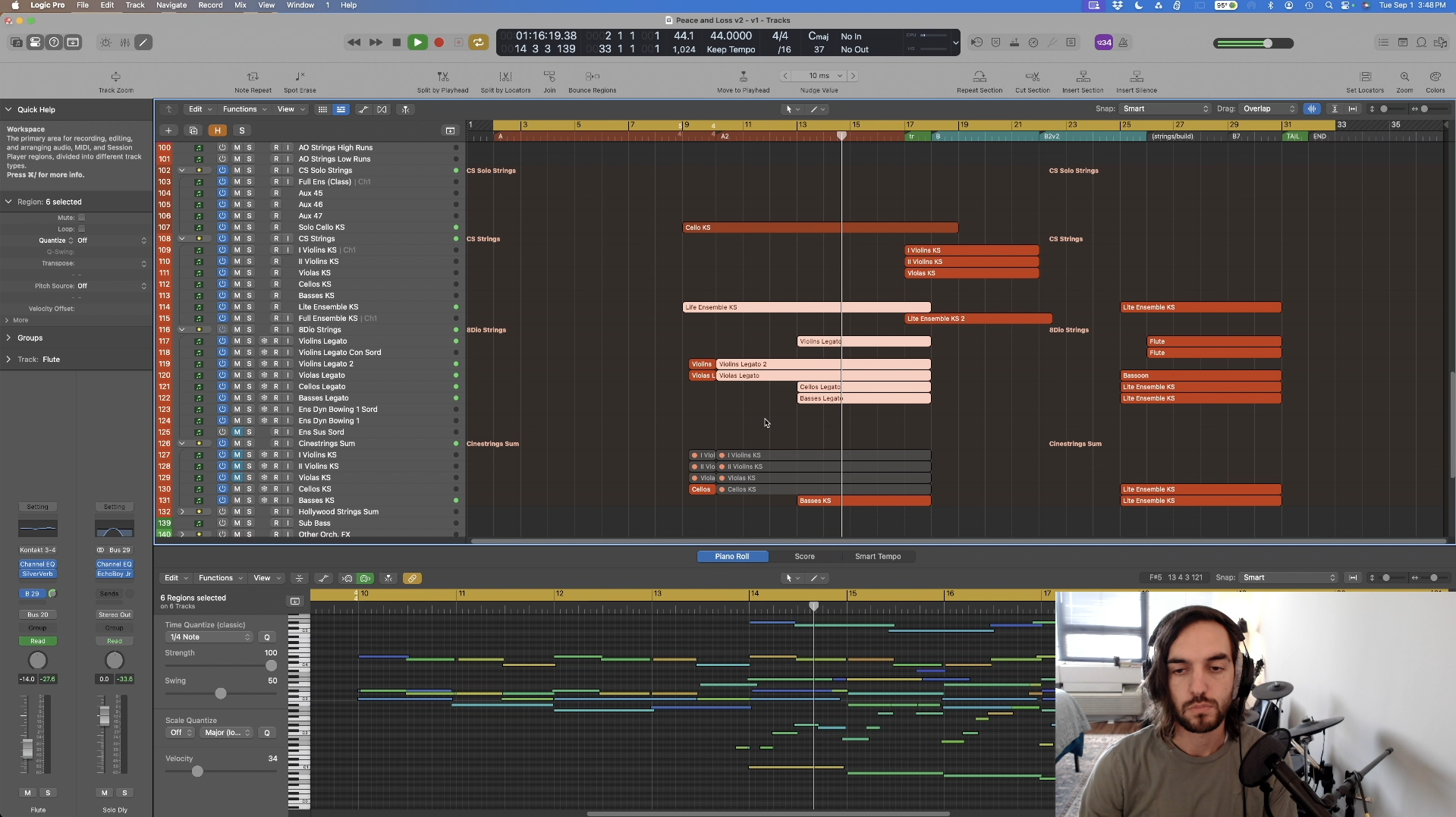
Picture this: you sit down to write some music. You have some ideas, so you sketch them out. A few hours go by and you’re in the flow state - there’s no stopping you. But suddenly, the ideas come to an end. You’re left with a track that’s partially finished. You come back to it the next day, and you still have no clue what to do with it. “I’ll come back to it later,” you think. The stress begins to wear you down. As it gets put off, your memory of it slowly fades as it collects digital dust on your hard drive. Sound like you? Me too.
I recently sat down to finish a track I had started 3 years ago in preparation for a new music pack I wanted to release. I took note of every strategy and principle I relied on to take my track across the finish line, and typed it all up here to share my experience and hopefully help fellow composers.
Notice First Impressions
Upon first listen, use your first impressions of your track as indicators for where your track can be improved. Don’t forget these! Write them down, if needed. After listening, review all the thoughts you had and take note of the constructive ones. For example, you might’ve noticed an unpleasant clash in harmonies between your cello and french horns. Or, maybe there was a motif you found very effective as a driving force which you could bring back later in the track.
This is an extremely useful skill to develop in your video game composing career. I practice this skill with tracks I recently wrote and with mixes I recently completed by listening to the previous day’s work the following morning. But whether it be the mix or compositional structure, having a fresh set of ears is incredibly valuable for finding spots that can be improved.
Make Use of Musical Form
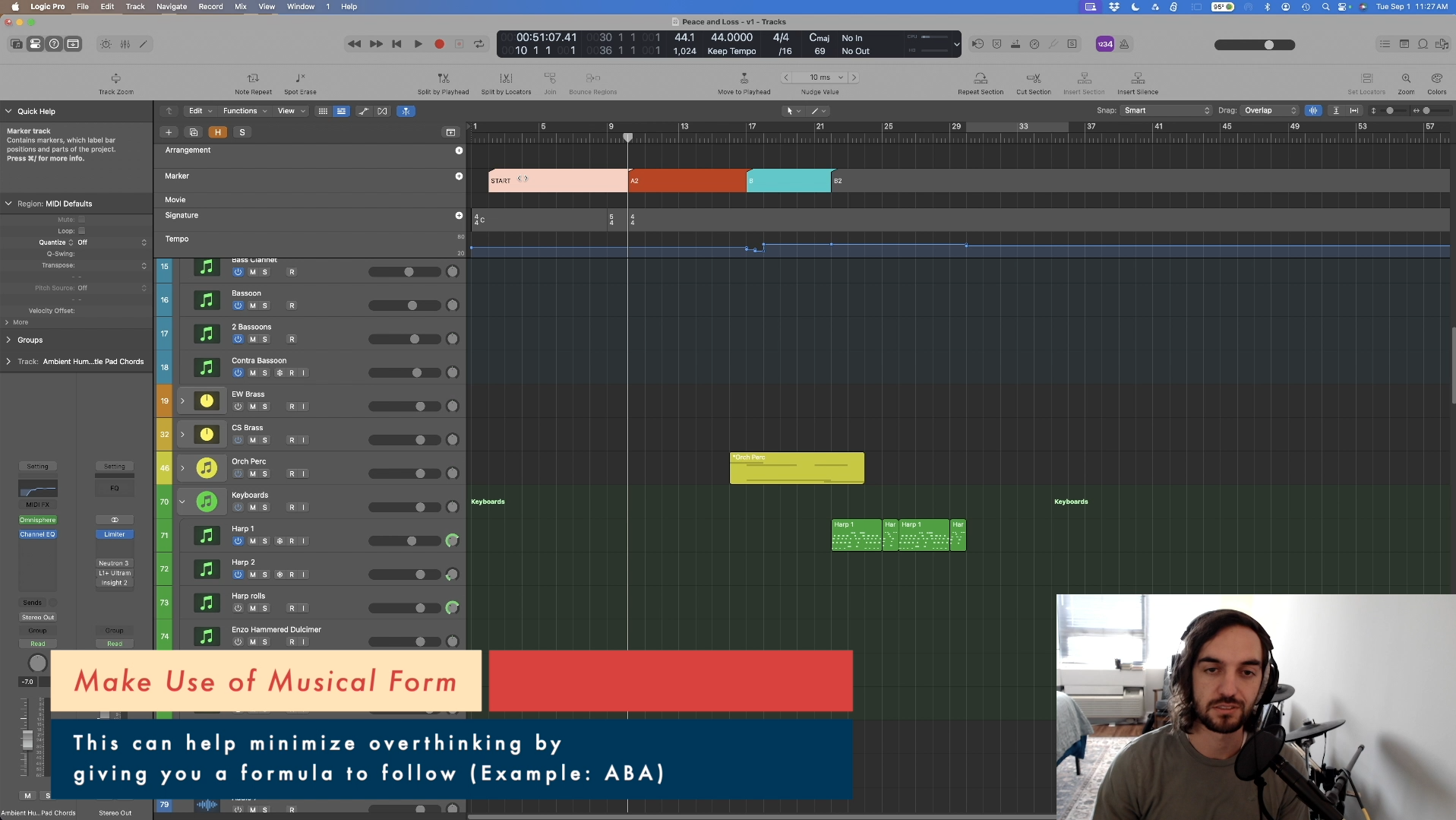
Simply put, form is how we analyze and understand music. A widely-known example of form is what you would hear in popular music today: verse, pre-chorus, chorus, etc. You can also use labels like “A” and “B” to differentiate different musical ideas.
Form is a huge aid when composing and, especially, finishing a track. Having a form in mind can minimize overthinking by giving a formula to follow as a guide. A simple example of a form would be: ABA.
Recycle & Reuse Material
Use what you’ve already written to guide you in the type of harmonies, cadences, and melodies you’ll use to complete the track. This means you’ll need to take time to look back and analyze the harmonic decisions you made when you first wrote the track. This practice will create a sense of cohesiveness, rather than sounding like a more advanced composer picked it up and finished it overnight.
Sometimes this takes the form of rewriting or editing your old ideas to bring them to life. Other times, you’ll hear that you were really onto something and will feel inspired to take those ideas further. It will differ depending on the track and how much was already written, but please do not disregard this strategy! Like many of the others, it is an extremely useful skill that you will rely on throughout your career.
Listen to Your Inner Voice
During my undergraduate studies, I came across this quote from John Williams regarding writer’s block:
“I never experienced anything like a block. For me, if I’m ever blocked or I feel like I don’t quite know where to go at the next turn, the best thing for me is to keep writing, to write something. It could be absolute nonsense, but it will project me into the next phase of thinking. And I think if we ourselves as writers get out of the way and let the flow happen and not get uptight about it, so to speak, the muses will carry us along.”
I shared this quote with one of my composition mentors, to which he responded, “It sounds like [John Williams] has an incredibly healthy relationship with his inner voice.”
I’m reminded of both the quote and its commentary any time I am unsure what to do next with my music.
Learn to trust your inner ears and intuition. Learn to get out of the way and let the creativity flow. This is a muscle that will need to be exercised, but it is well worth the effort. Not only will it help you lean into your authenticity as a composer, but, like Williams said, it can also “project [you] into the next phase of thinking” and place you in a spot you wouldn’t have arrived at otherwise.
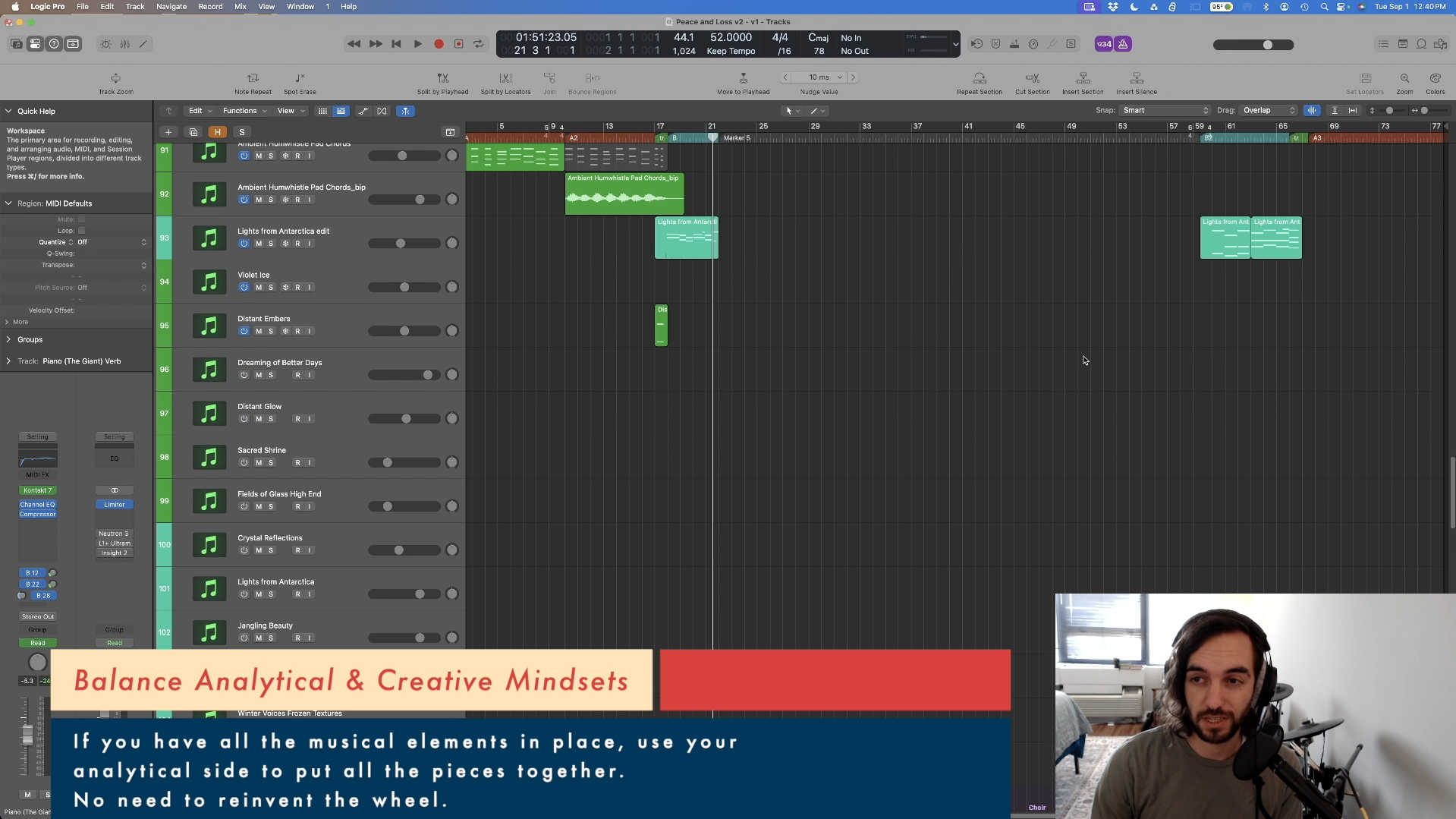
Balance Analytical & Creative Mindsets
Speaking of mentors in my undergrad, I had another mentor tell me that they like to view the creative process in two phases. The first phase is like a child playing in a sandbox. There are no rules, only play. The second phase is when the child leaves and the adult enters the sandbox. The value of the adult is to make sense of the messy play and to bring a sense of organization and structure to what the child created. Both are essential, but they each need their time to do their job without the other interfering.
The child is our creative mindset - the excited, zealous part of our mind that will say things like, “You know what would be cool? A distorted guitar! Let’s add it here!” While the adult is the one that says, “Now, now, we were asked to use only choir, remember?”
Relating to tracks that are partially written, if you have all the musical (or, creative) elements in place, your analytical brain will be required to piece everything together. There may not be a need to reinvent the wheel by writing new material. If you’re missing musical elements to complete the piece, however, then by all means invite the creative!
Your creative mind will give you new musical ideas. Your analytical mind gives you solutions to problems when things are not sitting right. Balancing these two mindsets may be difficult at first, but when working in harmony together you will have an easier time making effective decisions to complete your music.
Fortitude
Once you know what to do - or once you have a plan laid out for how you will complete your track - the next step is to do it! I won’t say much more on this, because if you’ve finished even one piece of music (or any artistic endeavor), then you’re already familiar with the fact that commitment and diligence is key. It’s tough work, yes - but hey, you’ve made it this far! Take things one step at a time, if needed.
Know When to Call it Finished
Lastly, we could technically work on our tracks forever. What has helped me the most is setting deadlines and sticking to them. That way, I know that no matter what it has to be done by that date. This helps me focus on what really matters and has also helped me increase my composing speed.